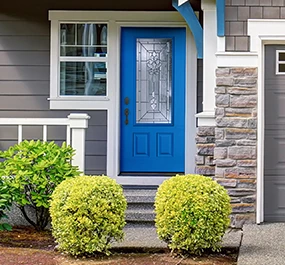
As winter begins to wind down and temperatures start to shift, it’s easy to assume energy efficiency becomes less important. In reality, late winter and early spring are when homes often experience the most stress on heating and cooling systems. Temperature swings, lingering cold snaps, and increased daylight all put pressure on a home’s exterior—especially the entryway.
A truly energy-efficient front door isn’t just about one component. It’s about how the entire entry system works together to reduce air leakage, maintain indoor comfort, and protect long-term performance.
Energy Efficiency Starts With the Full Entry System
When homeowners think about energy loss, windows and insulation usually get the spotlight. But front doors are one of the most frequently used openings in a home, making them a critical factor in thermal performance.
An energy-efficient entryway is made up of three key components working together:
- The door panel
- The frame
- The glass or glazing, when applicable
If any one of these elements underperforms, energy efficiency suffers.
Fiberglass Doors: Built for Thermal Performance
Fiberglass doors are well-suited for year-round efficiency because they naturally resist expansion and contraction caused by temperature changes. Unlike wood, which can swell or warp, or steel, which can transfer cold and heat, fiberglass maintains its shape and seal integrity across seasons.
Plastpro fiberglass doors are engineered with a high-density polyurethane foam core, helping slow heat transfer and support consistent indoor temperatures. This construction allows the door panel itself to act as a strong insulating barrier—without sacrificing durability or design flexibility.
The Role of the PF Frame
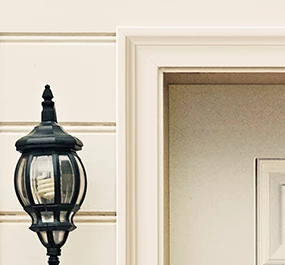
Even the most advanced door panel can lose efficiency if the frame surrounding it fails. Traditional wood frames are vulnerable to moisture absorption, swelling, and long-term deterioration, all of which can compromise weather seals.
Plastpro’s PF (Polyfiber) Frame is a fully composite frame designed to resist moisture, rot, and warping. Because it maintains its shape over time, the PF Frame helps keep weatherstripping properly aligned, reducing drafts and air leakage during both cold and transitional seasons.
Insulated Glass: Letting in Light Without Losing Comfort
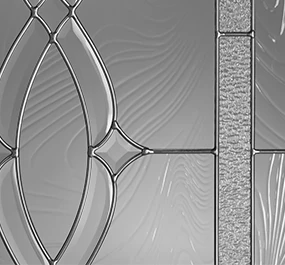
For entryways with glass, insulated glazing plays a crucial role in energy efficiency—especially as daylight hours increase toward spring. Properly insulated glass allows natural light to enter while helping limit unwanted heat loss or gain.
When combined with a fiberglass door and composite frame, insulated glass contributes to a balanced entry system that performs consistently as outdoor conditions fluctuate.
Why Late Winter and Early Spring Matter
As winter ends, homes often experience:
- Cold mornings and warmer afternoons
- Increased HVAC cycling
- Wind-driven drafts
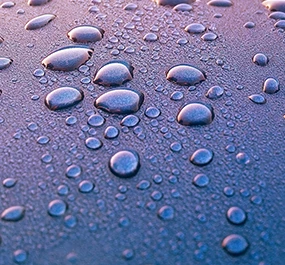
- Moisture from melting snow or seasonal rain
A well-designed entry system helps manage these changes by maintaining a tight seal, reducing energy strain, and supporting indoor comfort without constant thermostat adjustments.
A Smarter Approach to Energy Efficiency
True energy efficiency doesn’t come from a single feature—it comes from thoughtful design across every component. When the door panel, frame, and glazing are engineered to perform together, homeowners benefit from improved comfort, durability, and long-term value.
With Plastpro fiberglass doors and PF Frames, energy efficiency is built into the system—not added as an afterthought.

