
Choose Testing Results:
Plastpro Test Results and Search Tool
Use our search tool below to easily find the U-Factor, SHGC, R-Value, and CPD for each Plastpro door, based on series, item type, height, glass size, and glass design.
PLASTPRO’S ENERGY STAR AND NFRC RATINGS
Plastpro is proud to offer a selection of doors that are ENGERY STAR qualified, which means these doors are independently tested and verified by the National Fenestration Rating Council (NFRC) and meet the United States Environmental Protection Agency (EPA) energy efficiency guidelines.
Plastpro’s NFRC-certified products are labelled to clearly break down energy performance. This is determined by the product structure and the amount of glass in the door by area, which provides a Solar Heat Gain Coefficient and a U-Factor rating.
You can search Plastpro products by type for their ratings at: https://search.nfrc.org/search/SearchOption.aspx?type=D.
PERFORMANCE CRITERIA FOR DOORS
Searching for an energy-efficient door can be complicated. To help you in this process, here is a brief summary of several key factors to keep in mind.
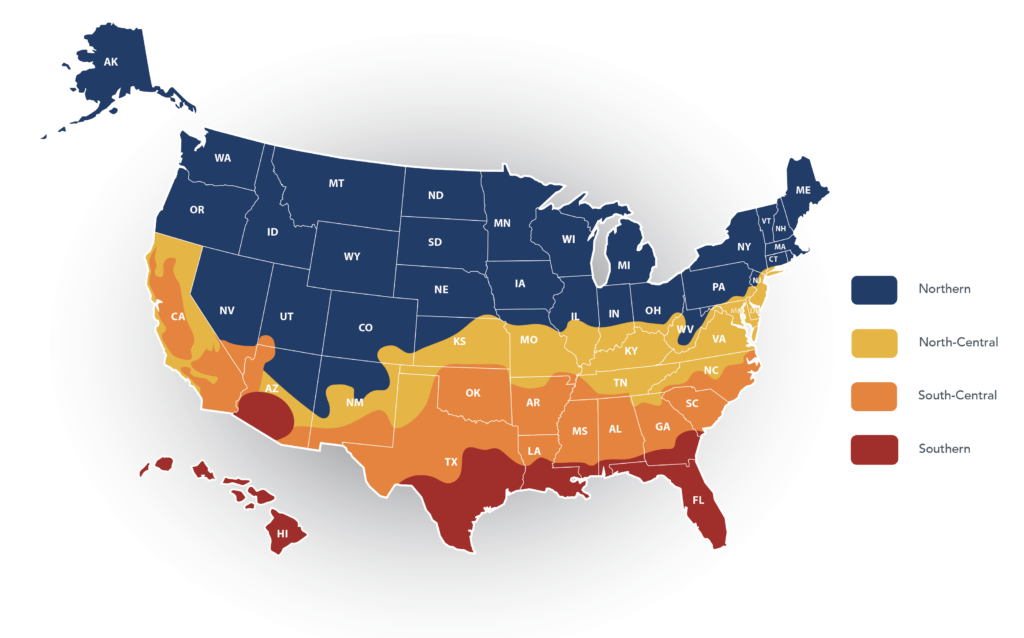
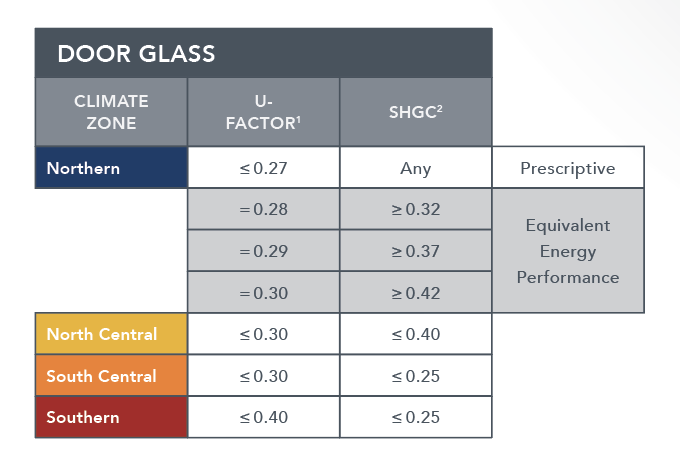
A Solar Heat Gain Coefficient reflects the product’s ability to resist indirect solar radiation. The desirable coefficient depends on where you live- in warmer climates a lower solar heat gain coefficient will help keep the indoors cool, but in cooler climates a higher solar hear gain coefficient can help to keep the home warm. This rating comes in a range of 0-1.
The U-Factor rating measures how well a product keeps heat trapped inside, with a lower number meaning a higher percentage of heat is retained. Therefore, you want to look for a low number, with the range being 0-2.
R-values measure a product’s resistance to heat loss. Look for a higher R-Value for a more energy efficient product.
To get the best ratings, you should consider the amount of glass the door has (the glazing level) as well as the emissivity of the glass. The U-Factor Rating is affected by the airflow around the window and the emissivity of the glass. Glass with a low emissivity coating is a good option, because it absorbs less of the energy in the room to radiate through the glass, better maintaining room temperatures and conserving energy.
Find out more for the requirements for your location here: https://www.energystar.gov/index.cfm?fuseaction=windows_doors.search_climate.
SPREADSHEETS
See our spreadsheets with all of our energy efficiency and testing information, linked here.